Affiliate Disclosure: This post may contain affiliate links. If you book or purchase through our links, we may earn a small commission at no extra cost to you. We only recommend things we genuinely believe in.
There is a particular kind of tired that a long corporate career produces. Not the tired that a good night’s sleep fixes. The kind that accumulates slowly, over years, until one day you find yourself sitting in a meeting room wondering how you got so far from the life you imagined.
We know that tired well.
Between the two of us, we have spent over two decades in corporate life. Good careers. Meaningful work, much of it. But somewhere along the way, the pace became the point — and we stopped asking whether the pace was actually taking us somewhere we wanted to go.
Nature brought us back to that question. Specifically, the mountains did.
Where We Come From
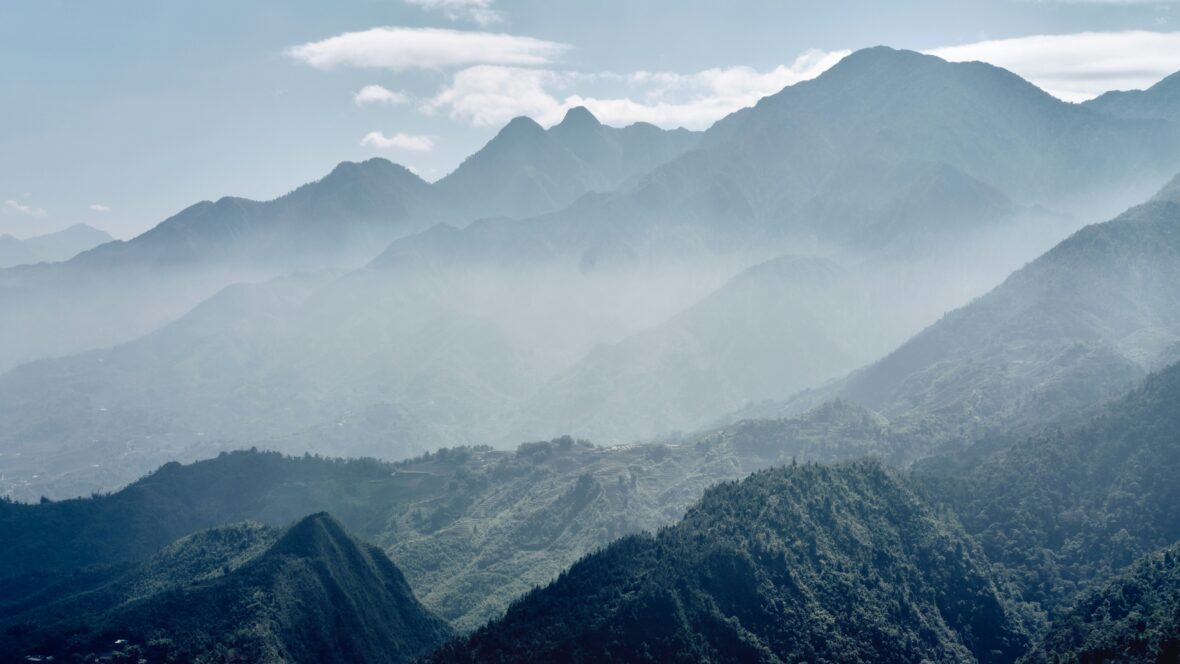
We were both born in the foothills of the Himalayas — Sikkim and Darjeeling, in the northeastern corner of India. Places where hills and mountains are not a weekend destination. They are the backdrop of ordinary life. You grow up understanding, in your bones, that nature is not somewhere you go to escape. It is somewhere you come from.
That understanding traveled with us through more than two decades in North America — through the city life, the corporate roles, the carefully optimized schedules. It did not disappear. It just got quieter, the way important things do when life gets loud.
Reconnecting with it has been, in many ways, the most meaningful work of our recent years.
What Happens When You Return to the Hills
We live in Ontario, Canada — a place with its own quiet beauty, its own forests and lakes and long winter skies. But there is something about hills and mountains specifically that does something to the nervous system that flat land does not quite replicate.
When we have had the chance to spend time in mountainous and forested landscapes — whether in the rolling hills nearby or further afield in places like the Appalachians — something shifts. The thoughts slow down. The body unclenches. The sense of scale that mountains provide — the reminder that you are small, and that this is a good thing — is genuinely restorative in a way that is hard to explain but easy to feel.
We started paying attention to what, exactly, was happening when we spent time in these places. And the more we paid attention, the more we wanted to understand it — and share it.
What Nature Actually Does — and Why It Matters
The restorative effect of time in nature is not just a feeling. It is increasingly well-documented.
Research from environmental psychology and forest medicine has shown that time in natural environments — particularly forests and mountainous landscapes — lowers cortisol levels, reduces blood pressure, improves mood, and supports immune function. The Japanese practice of Shinrin-yoku, or forest bathing, has been studied extensively and consistently shows measurable physiological benefits from simply being present in a forest, without hiking, without exercise, without any agenda beyond being there.
We think about this often in the context of our Himalayan upbringing. The practices that felt like ordinary life growing up — walking in the hills, sitting with the mountains, the rhythm of seasons — turn out to be genuinely therapeutic. Not just metaphorically. Physiologically.
In a world that has engineered almost all of that out of daily life, intentionally returning to nature is one of the most useful things a person can do for their own wellbeing. And yet most of us treat it as a luxury rather than a need.
A Vision We Carry
Somewhere along the way, a quiet vision took shape. One day — we do not know exactly when or how — we would love to create a small nature retreat. A place for people to spend time in the midst of hills and forests, to reflect on life, to re-energize, and to return to their everyday lives with more balance and intention.
It is a vision, not a plan. We hold it lightly. But it orients us — toward learning more about what genuine restoration in nature looks like, toward understanding the practices that help people slow down, toward building something that might one day offer others what the mountains have offered us.
In the meantime, the most important thing — the thing we can do right now — is to learn, and to share what we are learning. That is what Deuraly is for.
What You Will Find Here
Deuraly is a nature, mindfulness, and wellness blog. We write across four areas:
- Nature — the science and experience of spending time outdoors, the benefits of hills and forests, what slowing down in natural landscapes actually does to the mind and body
- Mindfulness — practices rooted in our Himalayan heritage that are grounded and genuinely applicable to busy modern lives
- Wellness — the kind that comes from slowing down, from time in nature, from Ayurvedic principles brought into everyday routines
- Activities — practical guides for nature weekends, digital detox trips, forest walks, and solo time in natural landscapes
We write from a place of genuine curiosity and personal experience — not as experts who have everything figured out, but as two people who are actively learning what it means to live with more balance, and who believe that nature is one of the most important teachers available to us.
Why We Think This Matters Right Now
We are living through a period of extraordinary disconnection from the natural world. Screens dominate our attention. Urban environments dominate our surroundings. The average person in North America now spends more than 90 percent of their time indoors.
The costs of this are not abstract. They show up in rising rates of anxiety, chronic stress, sleep disruption, and a pervasive sense of overwhelm that has become so common it barely registers as unusual anymore.
Nature is not a cure for all of this. But it is a genuinely powerful resource that most of us are dramatically underusing. Learning to reconnect with it — intentionally, practically, in whatever way is available to you right now — changes something real.
That is what we want to explore here, together.
An Invitation to Stay
If any of this resonates — the longing for a slower pace, the sense that nature might hold something you have been missing, the Himalayan roots or simply the love of hills and open skies — we would love for you to keep coming back.
We are in the early chapters of Deuraly. We are building slowly and intentionally, the same way we hope to live. Subscribe to our newsletter below and we will share our free guide — 5 Forest Bathing Practices for Beginners — a gentle, practical starting point for reconnecting with nature wherever you are right now.
The hills are patient. They will be here when you are ready.
— Bhuwan and Papita